

支持和下载   新闻和活动   红外知识   联系我们   更改语言
 
高级搜索  
  主页   工業應用   产品和附件   购买渠道
Home > News & Events > Success Stories > GS100 at Oregon Glass

GS100 Imaging System Helps Tempering Glass Without the Scrap at Oregon Glass

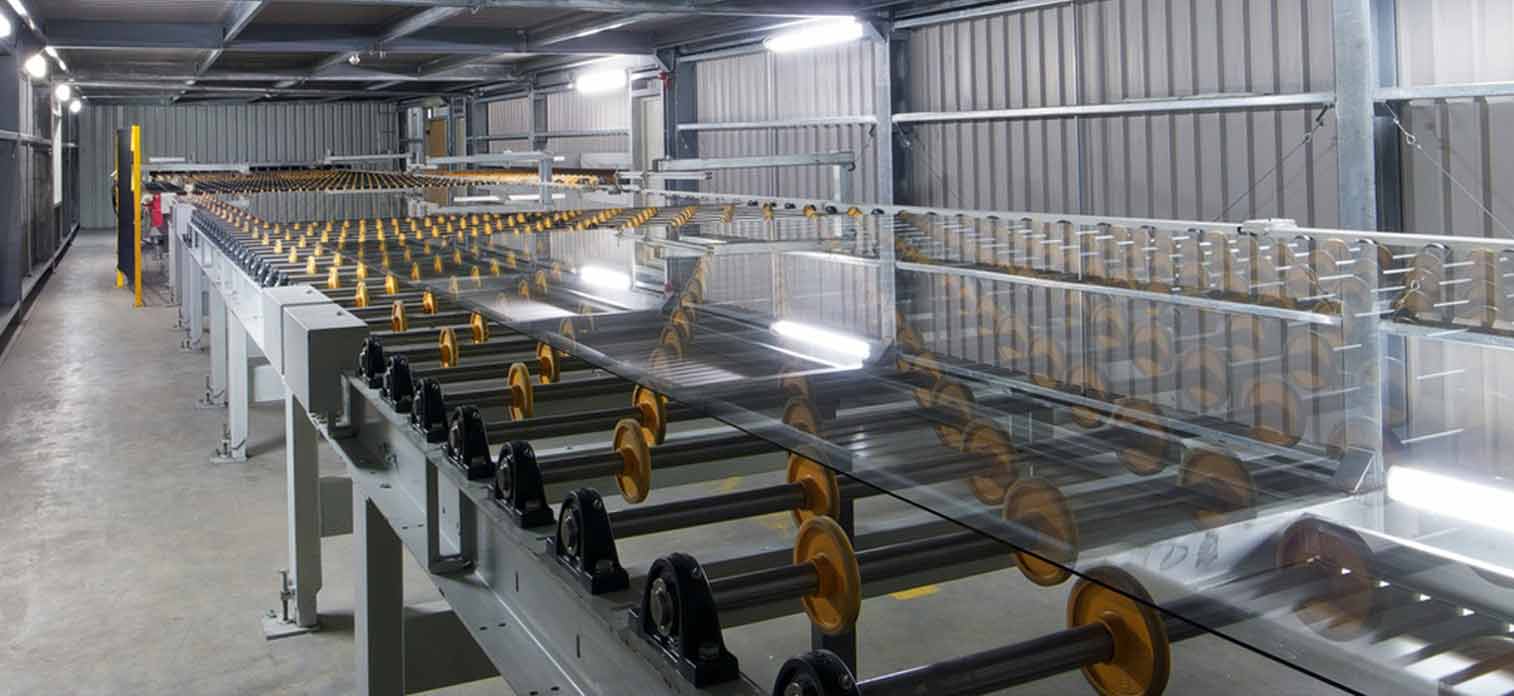
At Oregon Glass in Wilsonville, Ore., near Portland, tempering glass may be a lot like tempering chocolate, but you don’t get to eat your scrapped and broken pieces. The company makes tempered glass for windows and doors, and was experiencing a lot of breakage, according to Plant Manager Jeff Whited. To reduce the scrap, Whited installed a Raytek GS100 system in 2003. The new temperature measuring system scans the glass as it travels out of the tempering oven.

"We purchased the system to reduce the scrap rate of glass that breaks in the tempering quench because we were experiencing a large percentage of breakeage (3 percent),” he said. "With the aid of the GS100 we have been able to reduce the breakage by 65 percent."

At the heart of the GS100 system is an MP50 imager, which measures a line of 256 points using a rotating mirror that scans a 90º field-of-view up to 48 times per second. Scanning a glass part is initiated by the measured temperature, or an external "trigger" signal. As each heated glass part travels the field-of-view, a two-dimensional thermal image or "thermogram" is created. Just like a camera, the MP50 imager views the glass part from above, whenever it has a clear path. Pre-wired cables are connected to a PC where the installation dimensions are entered into the GS100 software.

At Oregon Glass, the information the GS100 system provides allows the operator to go into the furnace program and make the necessary modifications so the glass can be cooled in the quench zone without breaking. It also provides precise information as the glass travels out of the oven, and allows Whited’s crew to see the actual temperature.

After entering the temperature ranges he needed for his recipes into the system’s database, Whited found he had to adjust the temperatures in his three tempering furnaces to make them heat more evenly. In addition, since he uses various glass recipes, he can easily make temperature changes as necessary. His recipes call for temperatures from 620º to 640º C (1148º-1184º F) up to 700º C (1292º F), which may not sound like a huge difference, but he said a five-degree difference could cause a problem. Overall, the infrared temperature measurement solution implemented has worked well for Oregon Glass, according to Whited. It has cut the breakage rate in half and saved the company approximately $24,000 in the last year.

“We initially figured on a one-year payback,” he said of the GS100 system. “But it turned out to be five months.”

Noted by Kate McGuire, Raytek Corporation.


Raytek is a Fluke Company  |  Employment  |  About Raytek 
Site Map  |  Site Disclaimer  |  Privacy Policy

产品咨询电话:     (8610)64384691
雷泰.中国: 北京建国门外大街22号,赛特大厦2301室

© Raytek Corporation 1999 - 2008